
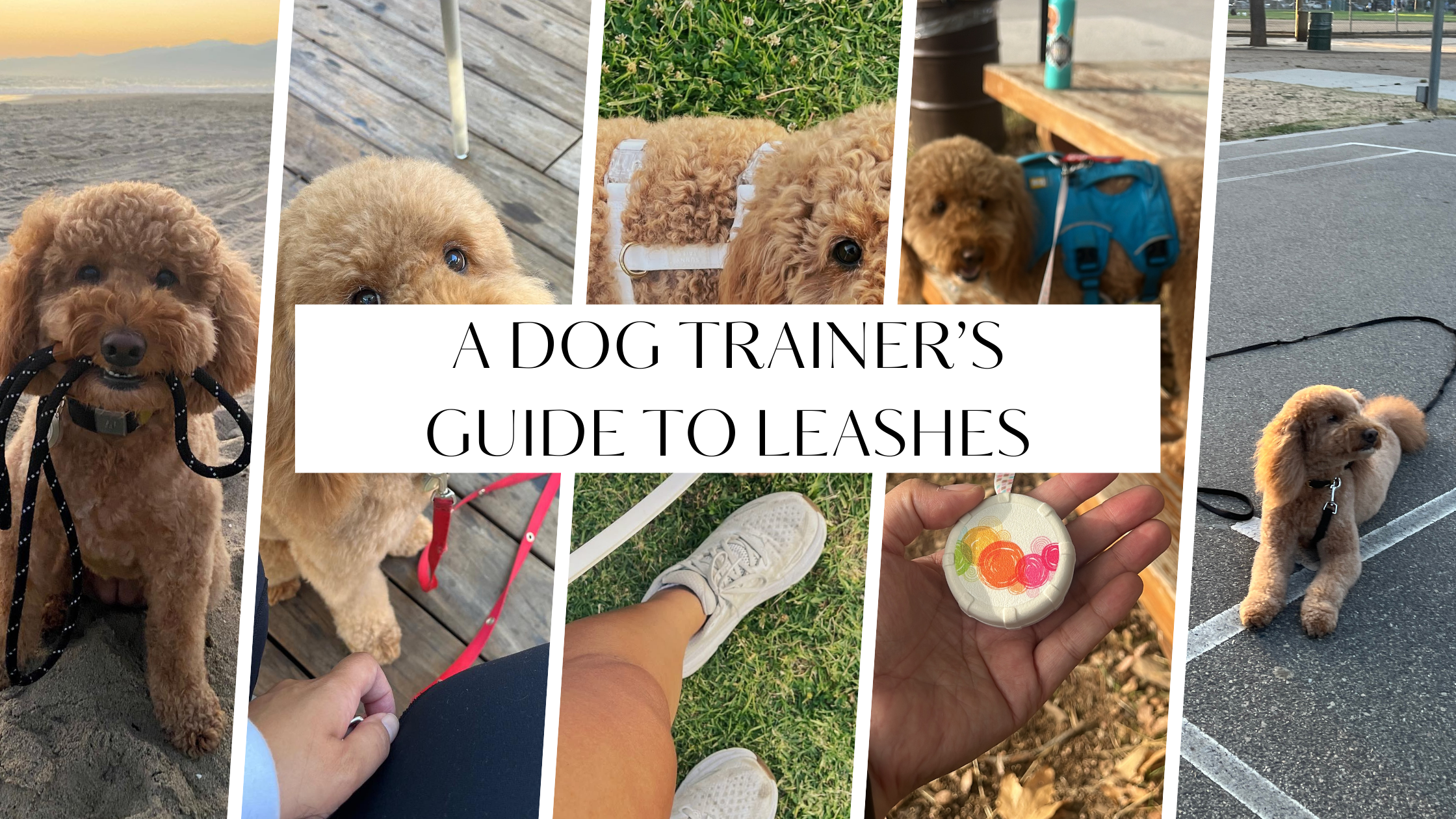
Having a dog means not only having the right equipment for them, but also, knowing when to use it. The leash is something every dog and owner should have in their puppy’s toolbox. It’s the most basic and essential piece of equipment you should have for your dog, besides a collar with ID.
With so many types of leashes out there, it can be hard to find the right one, or maybe you’ve already bought a leash but it’s just not meeting your needs. While you don’t need anything fancy, and a basic, regular flat lead is good enough for now, it can be helpful to gradually add more variety to your arsenal over time, or just explore the different types of leashes there are to get to know your options and their uses. Sometimes people pick things because it’s all they know and all they see around them, so a little experimentation will help expand your horizons!
Here are some of the leashes I keep in my toolbox and when I use them:
Regular Flat Lead:
This is the first leash everyone thinks of and almost always the first type that’s purchased. The standard leash is about 6ft long, but lengths can vary and you’ll also find these made from different material; there’s nylon, BioThane, leather, rope, cotton, and metal chain leashes, and they all can have their own uses. For example, a nylon leash would be a great leash for transporting, walking, or even tethering your dog, but a metal leash may be good for dogs who constantly chew through leashes. A BioThane or leather leash would be the easiest one to clean after getting dirty, so we can let this drag through the mud without worrying about staining or long-term damage.
Typically I’ll use a regular flat lead on a dog who has already learned not to pull on leash, but I will also use it for quick transports, training, and supervision purposes as well.

The slip leash is best for beach/sandy visits.
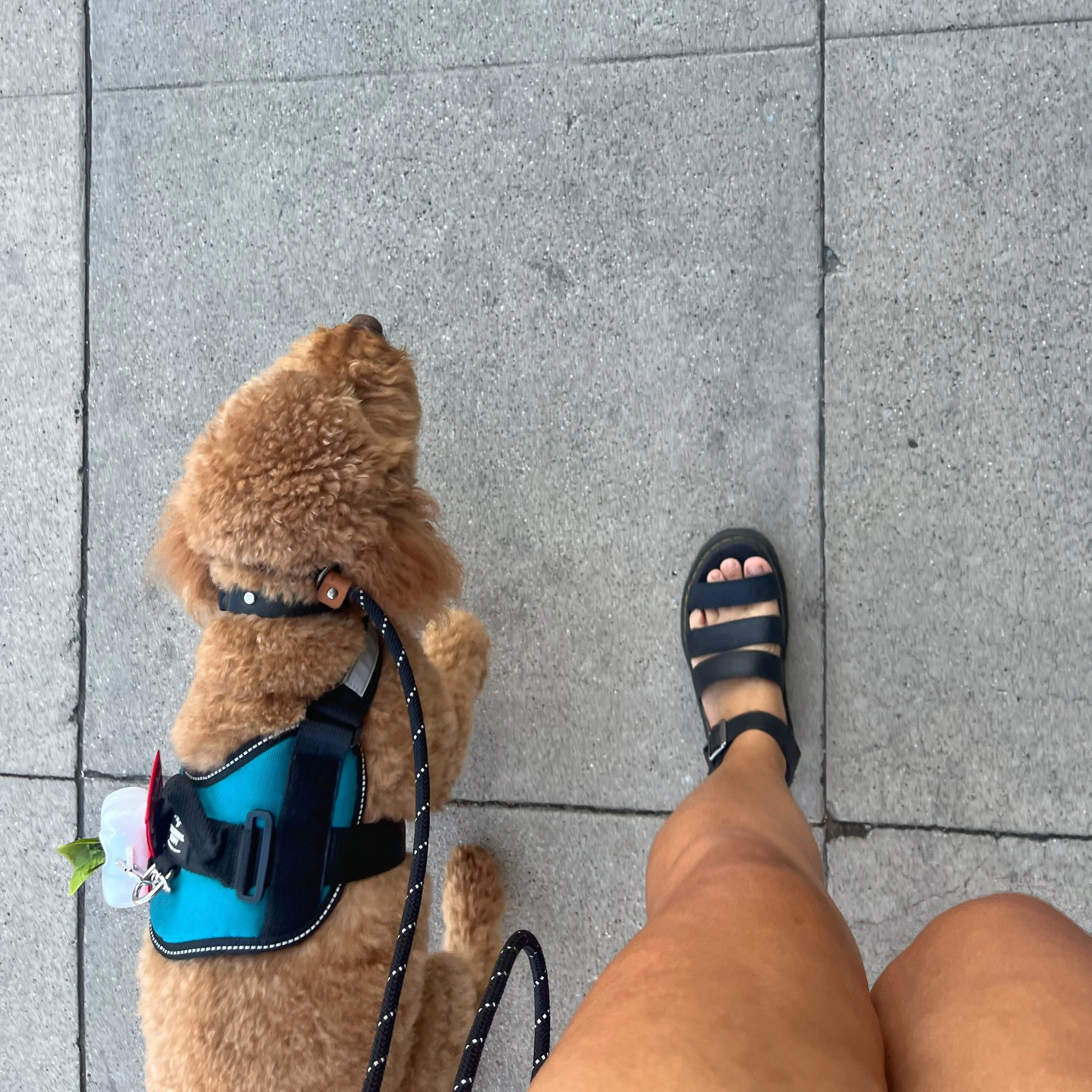
Proper placement is important.
Slip Leash
Think of this leash as a leash/collar combo. It’s just a roped leash with no buckles or clips. You place the looped part over your dog’s head (almost looks like you’re lassoing your dog) and you push the little tab alongside the rope down in order to secure the leash. When your dog pulls, the leash tightens, and when your dog stops pulling, it loosens up.
I like to use a slip leash on dogs who already know not to pull on leash, for quick transports or trips, and also for dogs who are in-training and are currently working on their leash skills. This is the leash I’ll use when introducing leash pressure & leash training.
The slip leash is also a great alternative from a flat lead for visits to the beach or sandy areas because since it’s essentially just a rope, with no buckles or clasps for sand to get in, you avoid future damage to your equipment. I’ve had sand get stuck in buckles and clasps before; sand gets caught in the spring mechanisms inside and jams the leash or collar’s buckle, often permanently ruining it.
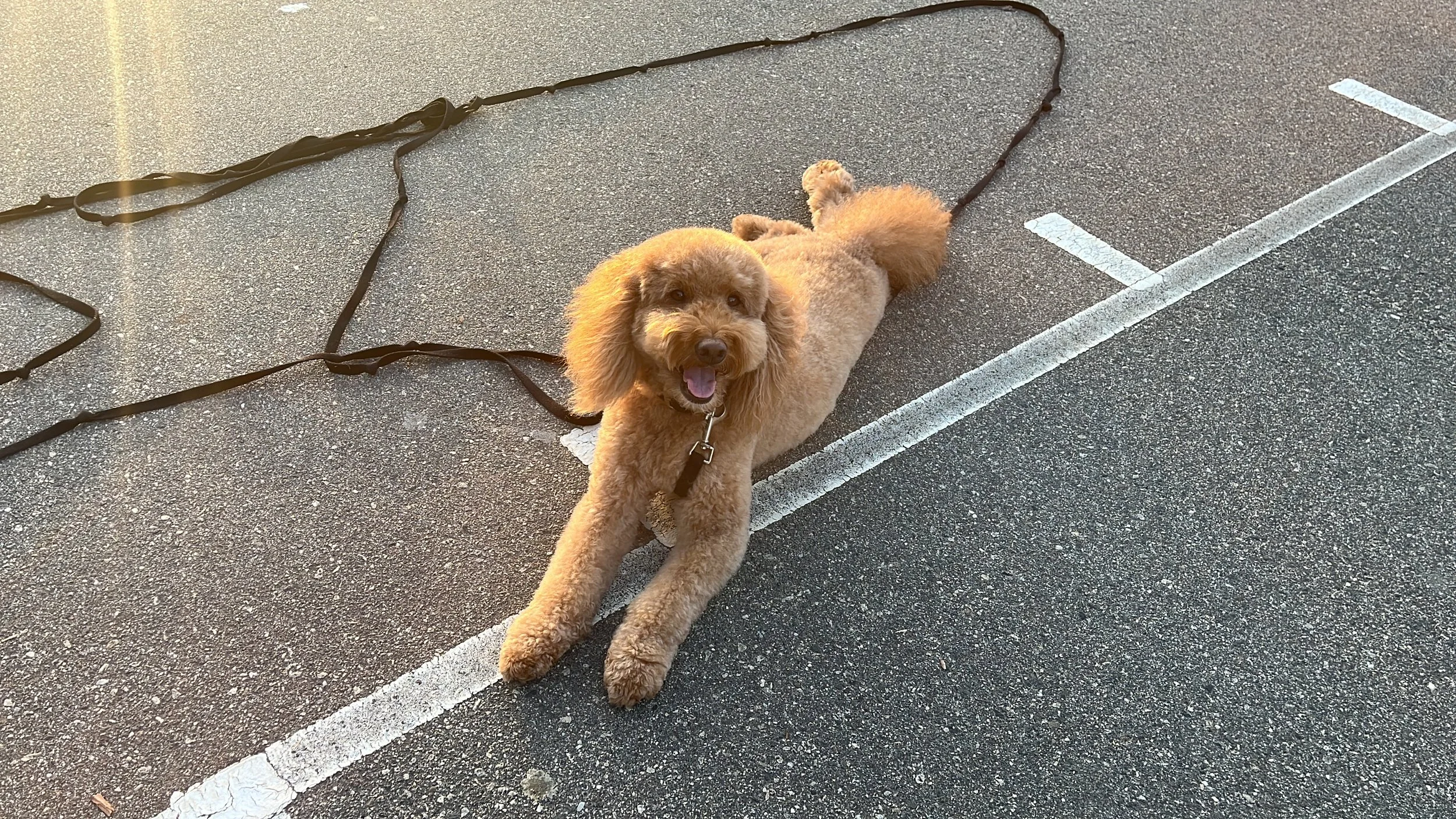
50ft long lead makes it easy to allow distance and still have freedom.
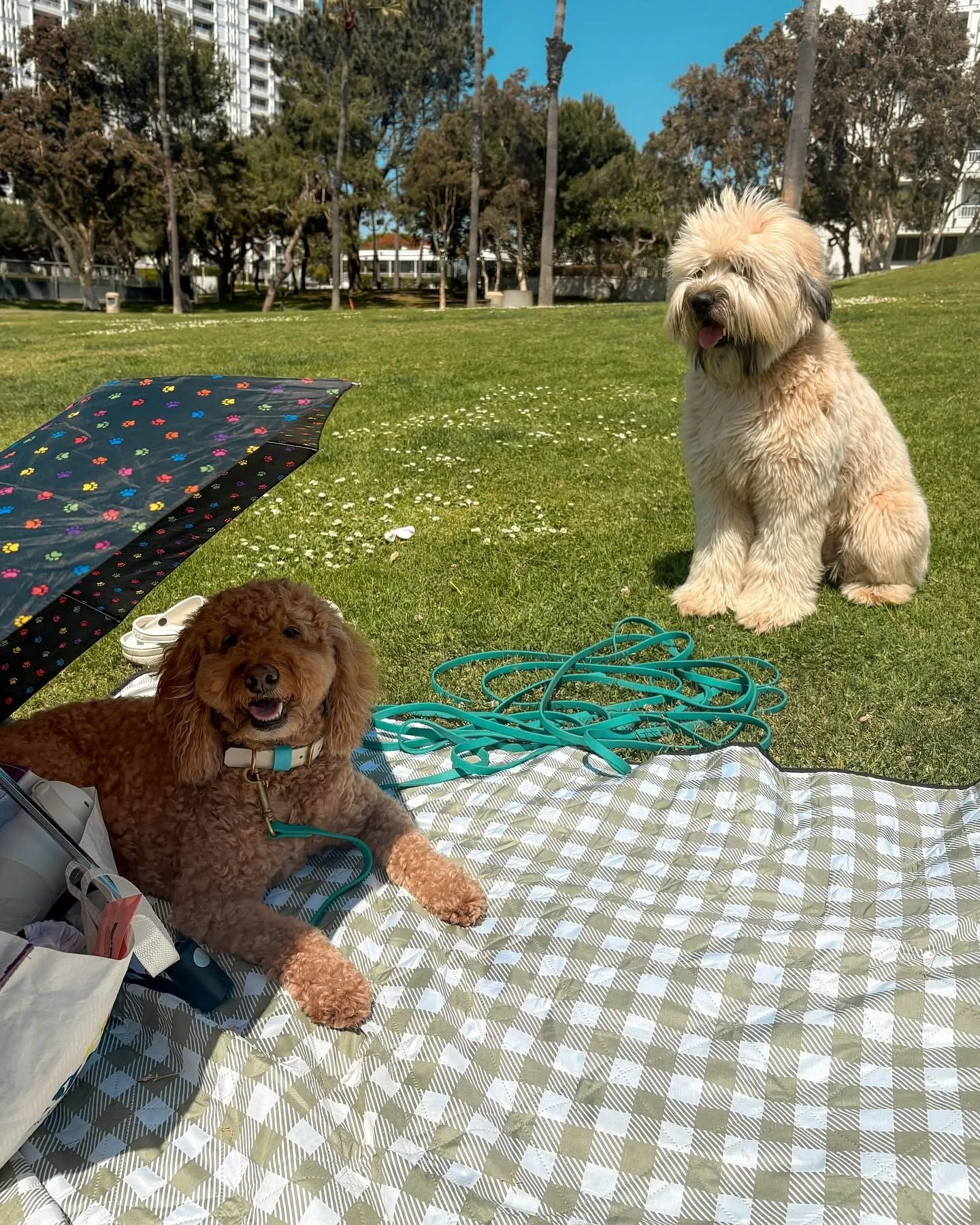
BioThane leashes are so durable and easy to clean!
Long Lead
A long lead is literally just that — a leash that’s really long. Think of your regular 6ft flat leash, but ranging from 15-50 ft long instead. You can get these in all types of materials and lengths to suit your needs and the environment you’re in.
For example I have a 15ft cotton leash, a 30ft BioThane leash, and a 50ft nylon leash. I’ll use a long lead to work on recall training, to allow “off leash” freedom to a dog who’s recall is still a work in progress (Your dog can feel some “off leash” freedom, while you’ve got the safety of knowing you can easily grab it when needed), or if we’re at a park that requires dogs on leash, but I want my dog to have a little more free rein.
If you want your dog to come when called from a distance, or off-leash reliability, you will need a long lead to be able to practice various distances so that you can still safely guide them back to you in the event they blow you off.

Lovely & I wearing Sunny Tails and my client & her dog wearing Snapleash — two of the best leashes!
All the rings on Snapleash’s leash makes it easy to transition from chest to waist.
Hands-free Leash
Hands-free is the way to be! Hands-free leashes are my favorite simply because I love having a dog who heels well enough that I don’t have to constantly hold the leash, and it’s definitely a perk to have two free hands when I need them. This is a leash I’ll use only for dogs who know how to walk properly, without pulling. Remember, just because tools are available to you, doesn’t mean that you or your dog are ready to use them.
The one I’ve used the longest, and the first one I ever used is Snapleash. This has multiple metal rings along the leash, allowing you multiple ways use the leash. I prefer wearing it either around my waist or across my chest. It’s such a simple, easy to use leash, and clipping to the desired ring or length took no effort at all. The next one I love is Shop Sunny Tails. Their hands-free leashes are beautiful, high quality, and come in a variety of colors. I must admit I’ve purchased several different colors along with their matching treat pouches and harnesses to make sure my dog is always looking fresh! These can be used in multiple ways as well, but I primarily wear these across the chest since it’s more convenient to leave them that way than to switch the lengths back and forth.
Metal/Chain Leash
I don’t often use metal or chain leashes — in fact, I’ve only ever used it a few times, but they can be helpful, so they deserve a mention even if it’s a rarity! A chain leash can look intimidating compared to the cute and colorful types of leashes you might see, but they serve a purpose, and it’s nothing to be worried over!
A chain leash can be very useful for dogs or puppies that like to chew through leashes out of frustration or boredom, saving your money from having to replace your leashes over and over.
Flexi/Retractable Leash
We all know what a flexi leash looks like, but not everyone knows how to use one. A flexi leash is a retractable leash attached to a plastic handle that has a brake/lock button. These leashes can vary in length, from 10ft to 30ft, and are made of a cord or tape-like leash.
These leashes allow a dog more freedom without a handler having to manually extend the leash or reel it back in constantly. It’s perfect in spacious environments where your dog can sniff around and roam freely or for dogs who tend to fluctuate between staying nearby and exploring at a distance. I primarily use it for potty breaks or neighborhood walks. While flexi leashes are perfect for trained dogs who understand leash pressure, have a reliable recall, and can easily engage with their owners, they’re often used with dogs who constantly pull and create tension the entire time, do not come when called, and are often too distracted to pay attention to their owners. Because of this, the leashes can cause serious injury, wrapping around and burning legs, hands, fingers, etc..
But don’t let this scare you! This is a great tool to use and like everything in life, and even in this list of leashes, there’s a time and place for everything, and that includes using a flexi leash.
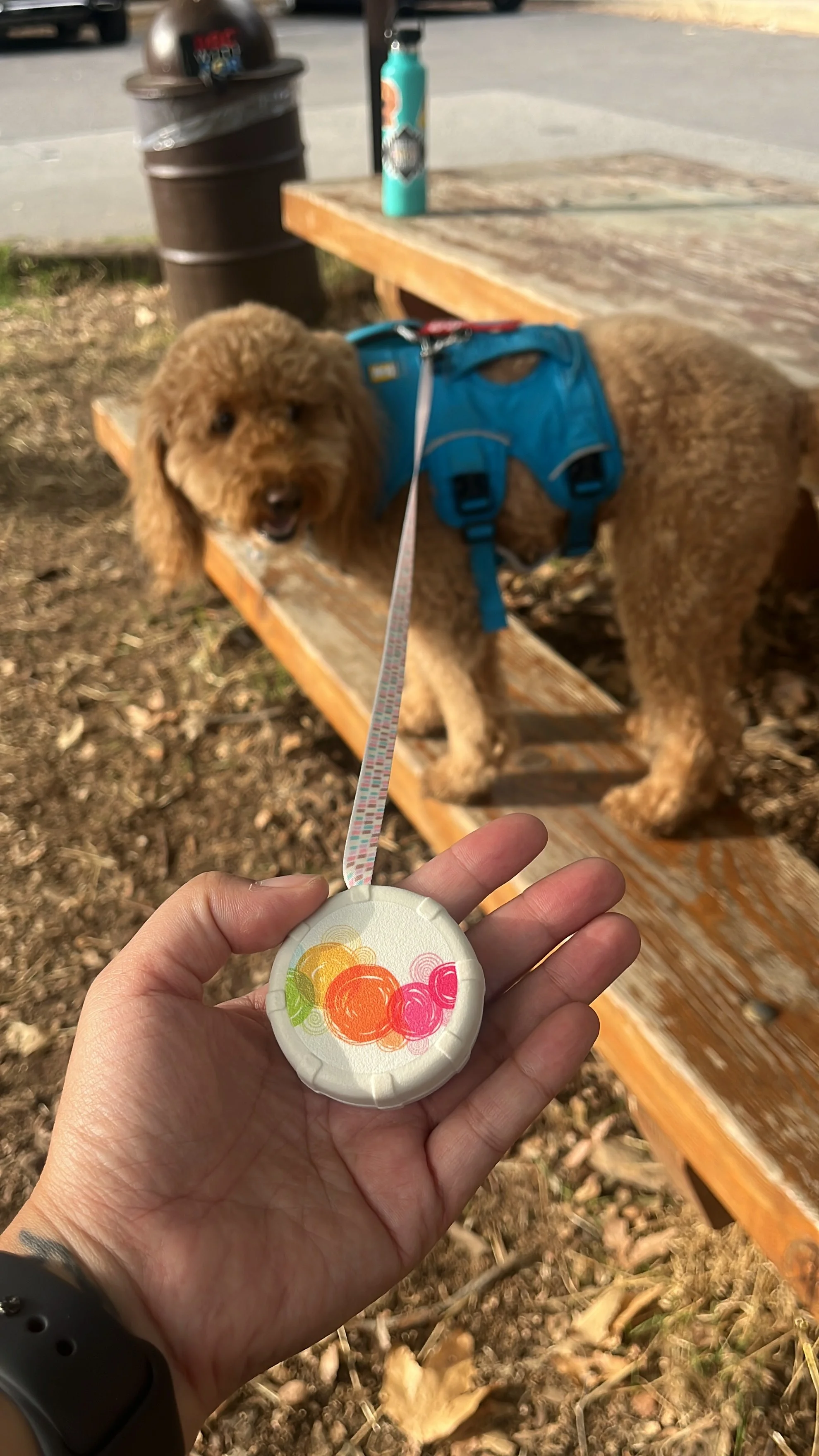
Looks just like a tape measure!
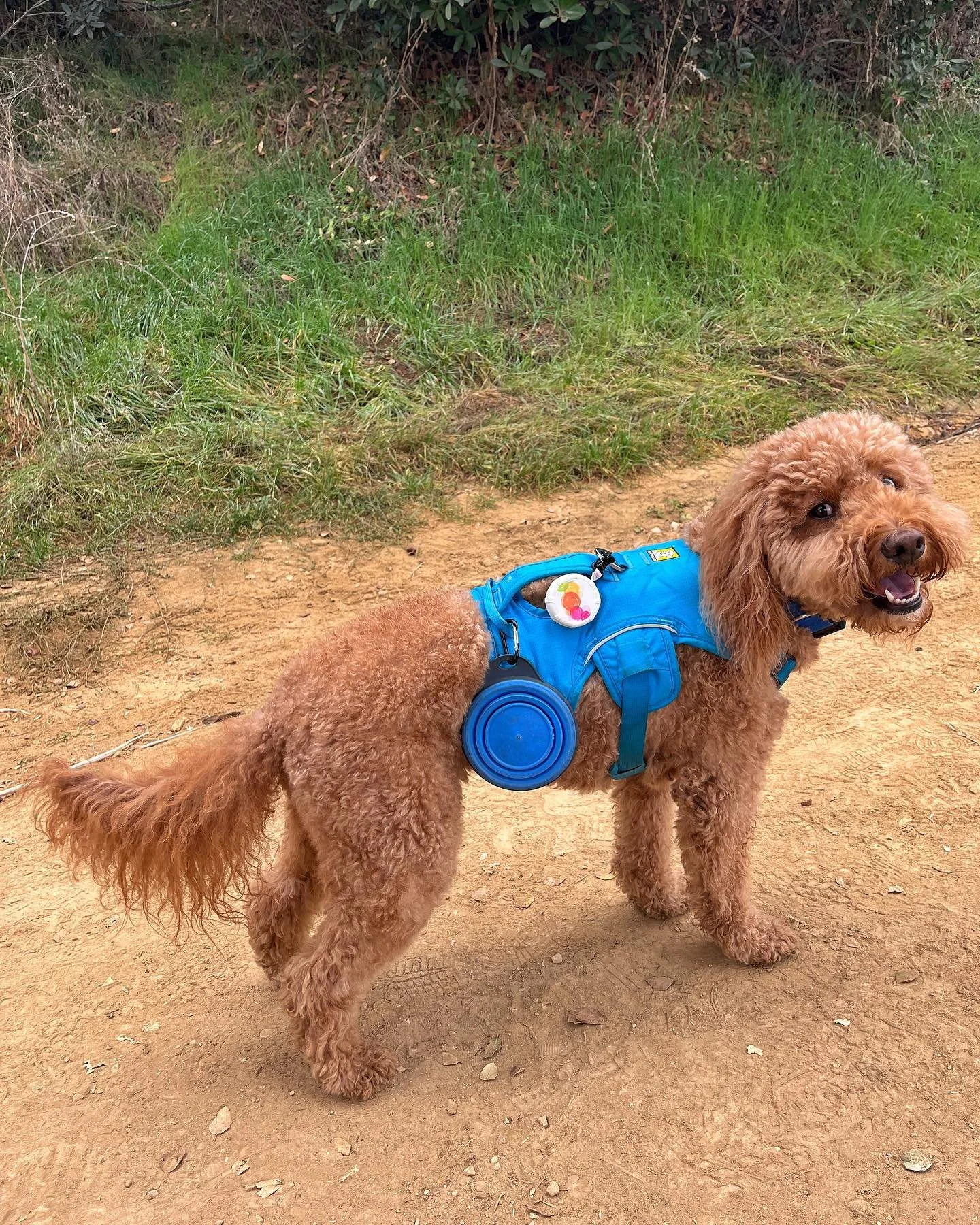
I love that it just hangs there conveniently & weightlessly.
LazyLeash
The LazyLeash is almost like a reverse flexi leash. It lengthens and retracts just like a flexi leash, but it only lengthens up to 40 inches and the “handle” is the size of a small medallion, fitting in the palm of your hands or worn hanging from your dog’s collar or harness. If your dog is off-leash trained and you’re in an off-leash area, this is the perfect leash to leave on your dog. it weighs next to nothing (approx 2oz) so your dog won’t even notice it’s there, and they can have off-leash privileges until you need to call them back and click to extend or retract to the desired leash length.
Traffic Lead
I’m not talking the traffic handles that can be found built into a long leash already, I’m talking about a short, standalone handle, typically between 8-24 inches. I rarely use these, but I do have them. Traffic leashes are designed to give a handler or owner immediate control of the dog by keeping them very close. These are typically used to keep the dogs close in busy environments, preventing them from lunging forward in high-distraction spaces, and allows you to quickly grab the handle if needed, so you don’t have to reel your dog in and fumble with trying to shorten the leash.
I’ve used these as an add-on for service dogs and their handlers as well as owners who need a little more control with their large dogs; this means the dogs have a regular leash on them, as well as the traffic lead.
These are not used as a primary leash for walking or sniffing, and isn’t a substitute for actual leash training.
At the end of the day, no leash is inherently “good” or “bad”. A leash is just a tool, and like any tool, its effectiveness depends on the person holding the leash, and how, when, and why it’s used. You don’t need to own every leash mentioned here; if what you have is working for you, then there’s no need to change anything.
If you’ve read this far, then you now have a better understanding of what other options there are and when they might be useful, so you can make a more informed decision that supports both you & your dog’s training goals should you be in the market for a new leash.
Below is a list of any current links and/or discount codes available:
Sunny Tails: https://sunny-tl.life/4bfpr36m LOVELY10 | 10% off at checkout
Snapleash: https://amzn.to/4biWU3V
Viper BioThane Long lead: https://amzn.to/46KuwpV
Hi Kiss Long Lead: https://amzn.to/46IIxVa
LazyLeash: https://amzn.to/4aVMDvy
Disclaimer:
While I am a professional dog trainer, the information shared on this blog is based on my training, experience, and best practices in the field. Every dog is unique and this content is intended for general informational and educational purposes only. It is not a substitute for an in-person assessment or medical advice from a licensed veterinarian. Please consult with a professional before making any decisions related to your dog’s health, diet, or behavior. The author and business are not liable for any harm, loss, or damage resulting from the use or misuse of the information or products mentioned on this site. By using this site, you understand that I am not responsible for any outcomes that result from applying the information or using the products mentioned here.
Some posts may contain affiliate links, which means we may earn a small commission — at no extra cost to you — if you choose to purchase through those links. We only recommend products we genuinely use or believe in. Discount codes may be provided when available, but we cannot guarantee their continued availability or effectiveness.
